
Insight222 People Analytics Trends 2025/26: Navigating AI and People Analytics from Ambition to Action
Since 2020, Insight222 has conducted one of the largest annual studies in people analytics every year, publicly available as the People Analytics Trends Report. Over this period, teams have grown by 60% despite significant global disruption, and in 2025 this growth has stabilised (compared to 2024) at one people analytics practitioner per 2,500 employees across 372 organisations. These organisations we’ve surveyed employ more than 20 million people in total, operate in over 180 countries, and span over 10 industries, including technology, financial services, and pharmaceutical and healthcare.
Our latest research shows that sustained investment in people analytics materially improves how organisations adopt and realise value from AI, leading to stronger business outcomes. 52% of organisations today report measurable business improvements from people analytics. That number is 90% among top-performing “A” Teams*, which are more closely aligned to core business priorities and central to enabling AI strategy
(*A teams: “A” Team consistently deliver valuable insights that are productised and scaled)
This article will explore the key insights and highlights from the report.
The AI Inflection Point: People Analytics Delivers More Value
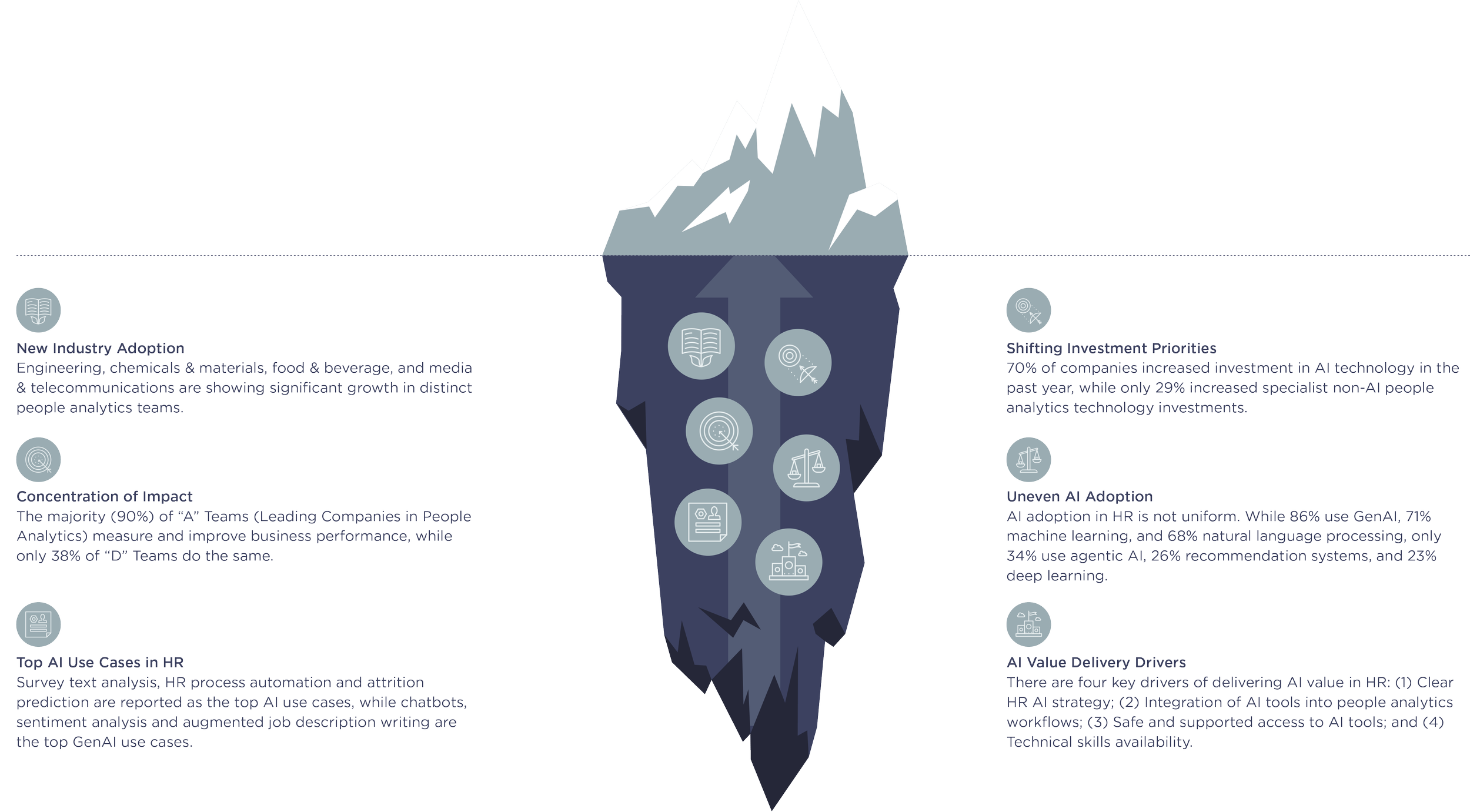
Our key findings are summarised in the figure below, which illustrates the iceberg principle: some insights are immediately visible, while most remain beneath the surface. The visible trends show that people analytics has grown 60% since 2020, team sizes have stabilized, and more advanced teams deliver greater AI adoption and impact. Less obvious—but explored throughout this report—are the insights that reveal how AI amplifies people analytics rather than replacing it.
“A Teams”: The Defining Trait of Leading People Analytics Teams
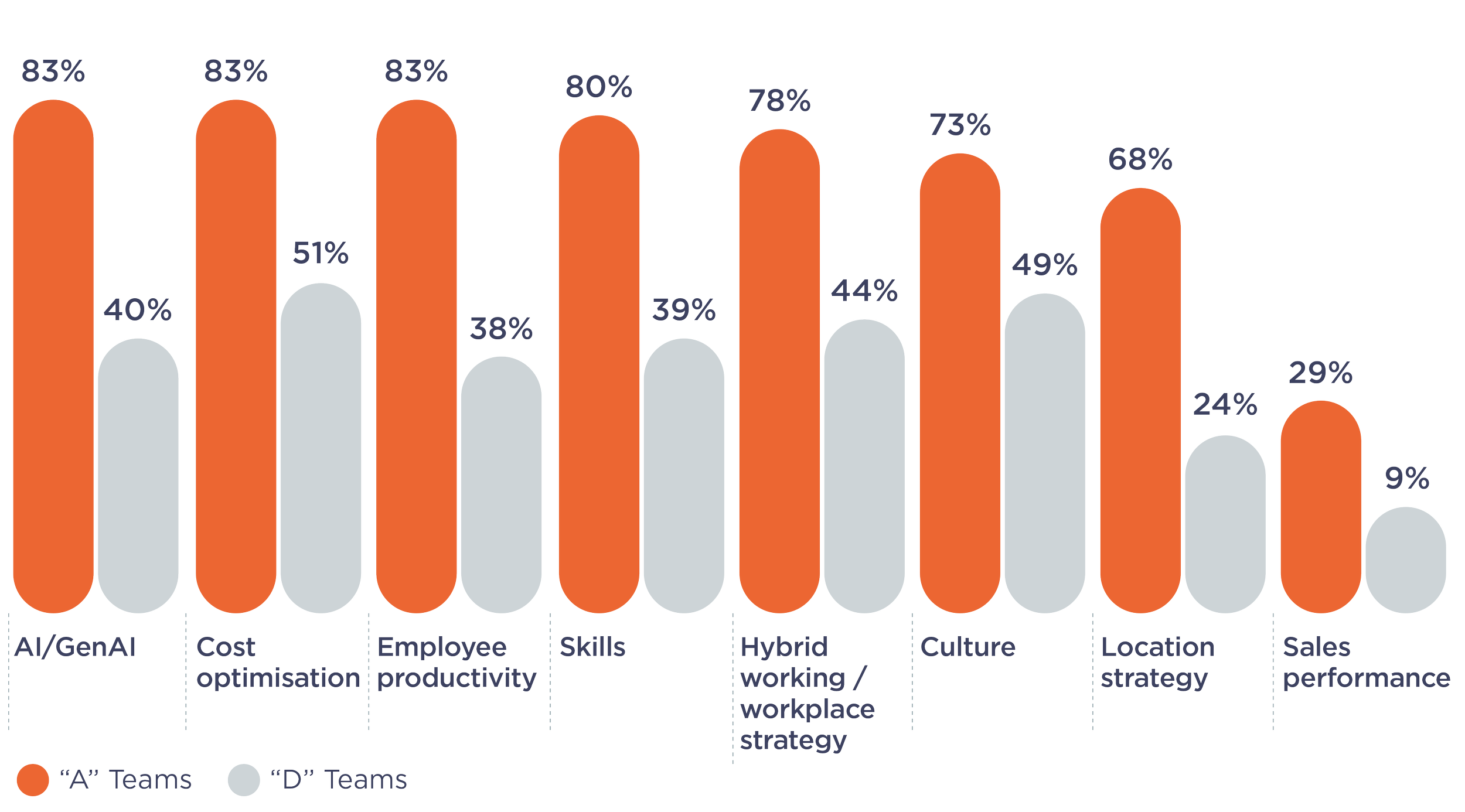
Our research shows that “A” Teams outperform others by focusing on clearly defined business priorities that matter most to the C-suite, business leaders, and HR. Compared with “D” Teams, far more “A” Teams target these critical areas (see figure below). By deliberately allocating their time on these topics, they drive measurable business outcomes—like improved employee productivity—and secure sustained investment, explored further in the accompanying case studies in our full report.
From Dashboards to AI: The Next Technology Wave
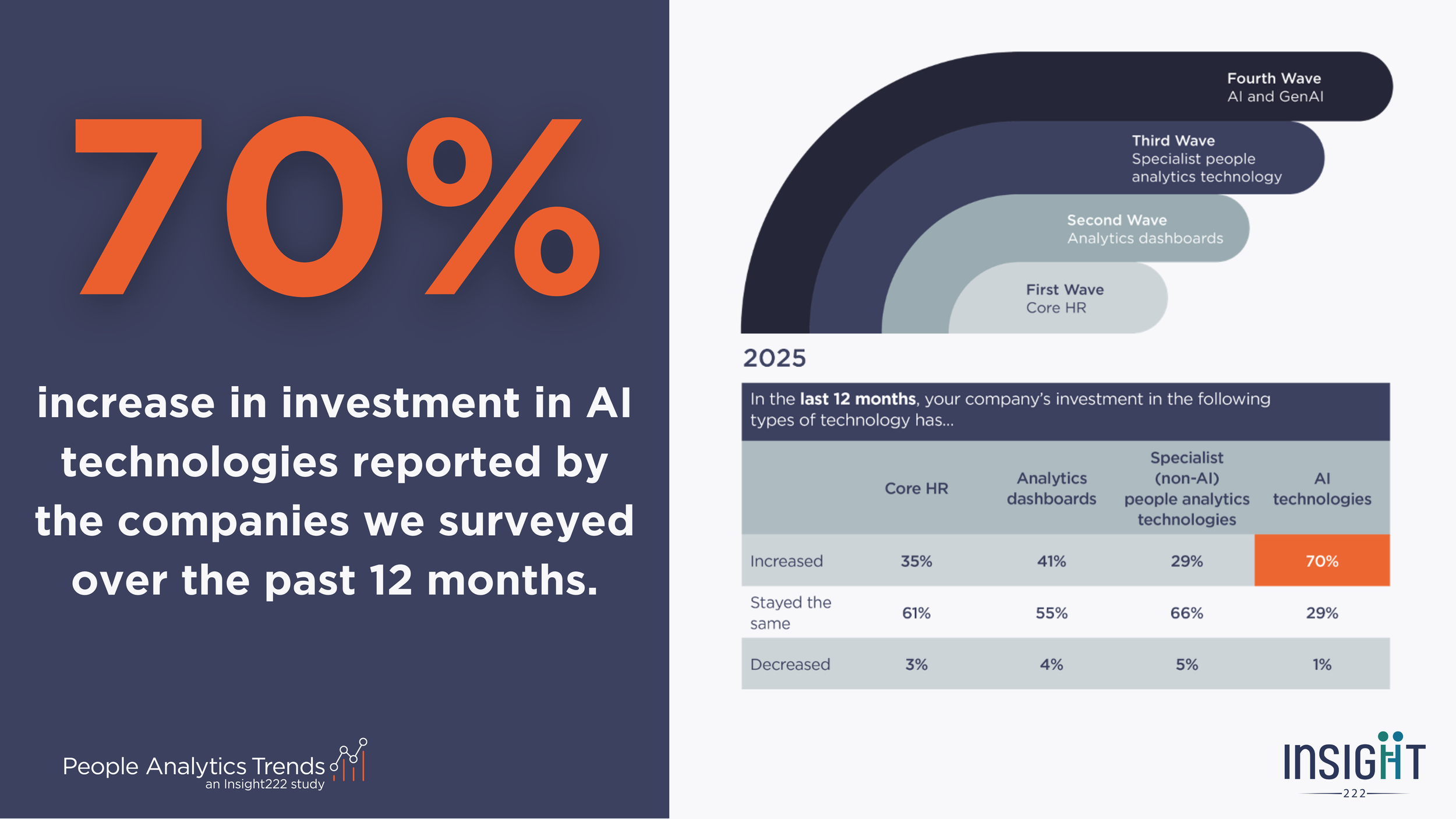
Given our focus on AI in this report, we asked many questions in our research about technology. Previously we have discussed technology in some depth, describing three waves of technology. In this report we note with much excitement a fourth wave of technology.
This wave focuses on AI technologies, and, unsurprisingly, a large majority of companies (70%) have invested in AI technologies. This is to be expected given the focus on AI globally. However, this also shows that investment in technology is seemingly being transitioned from other people analytics technologies to fund investment in AI. Both second wave (people analytics dashboards) and third wave (specialist people analytics) technologies have seen a decline in their investment, compared with the prior year’s forecast.
AI Empowers People Analytics, It Doesn’t Replace It
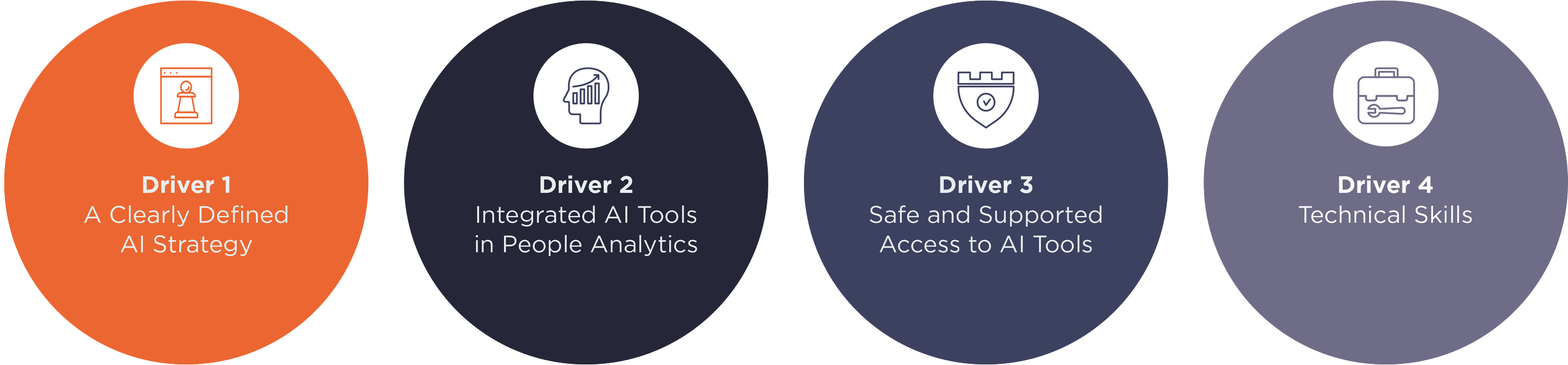
Driving value from AI in HR requires much more than just adopting technology. It demands strategic clarity with strong leadership commitment, integration of AI tools within core analytical functions, robust and supported user access, and comprehensive technical capability. Addressing these key drivers strategically positions organisations to realise substantial and sustained value from AI initiatives in HR.
Turn Today’s AI Unknowns Into Tomorrow’s Business Advantages
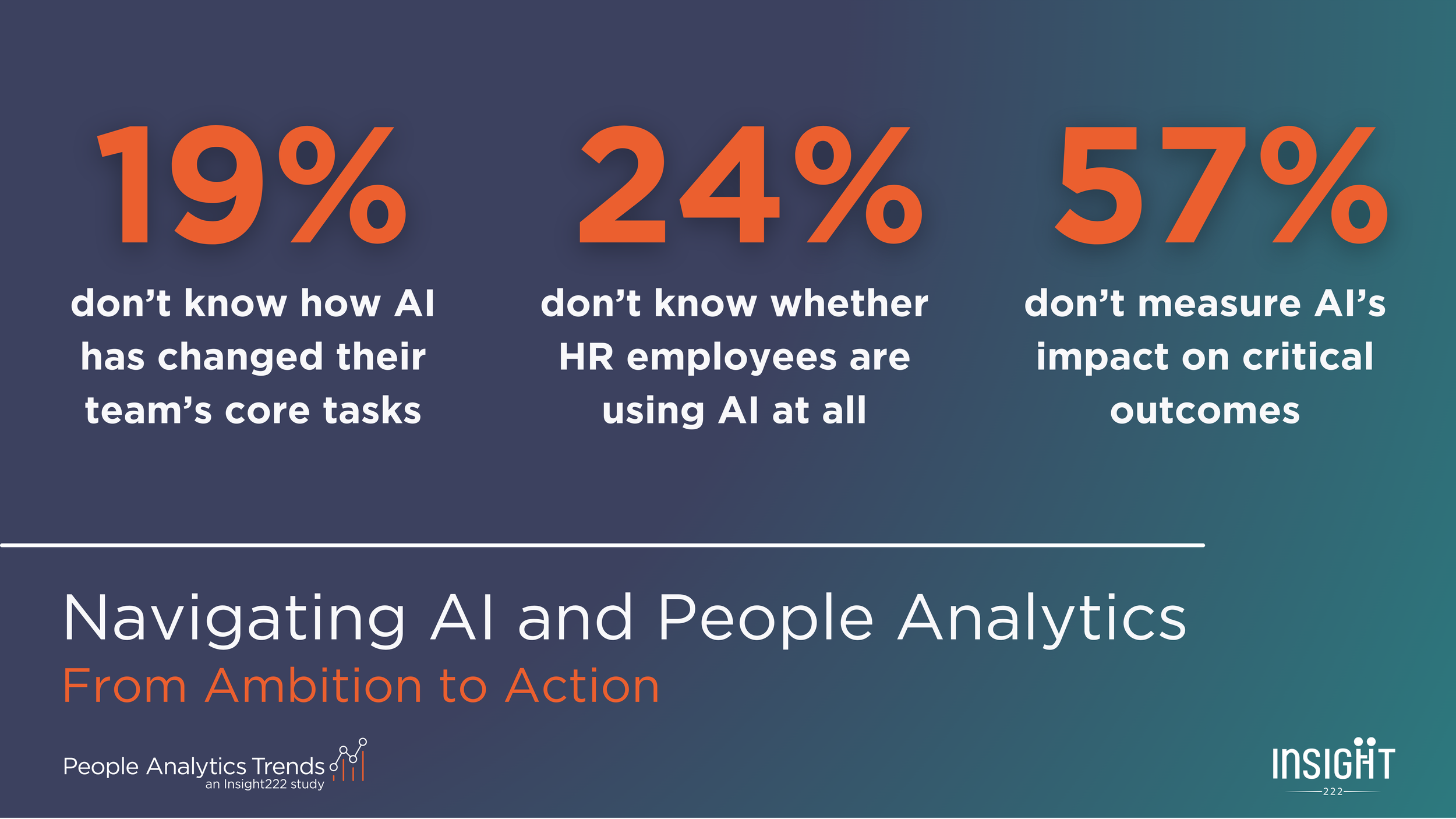
Despite the hype, most organisations are still early in understanding how AI creates value in HR. Many leaders lack clarity on AI’s impact: significant proportions are unsure how it has changed core tasks, whether HR employees are using it, or whether it delivers measurable value, and most do not track its impact on outcomes like productivity or engagement. This does not mean AI is failing, but that uncertainty is the current baseline—making the role of people analytics and senior HR leaders to create the conditions that surface real impact quickly.
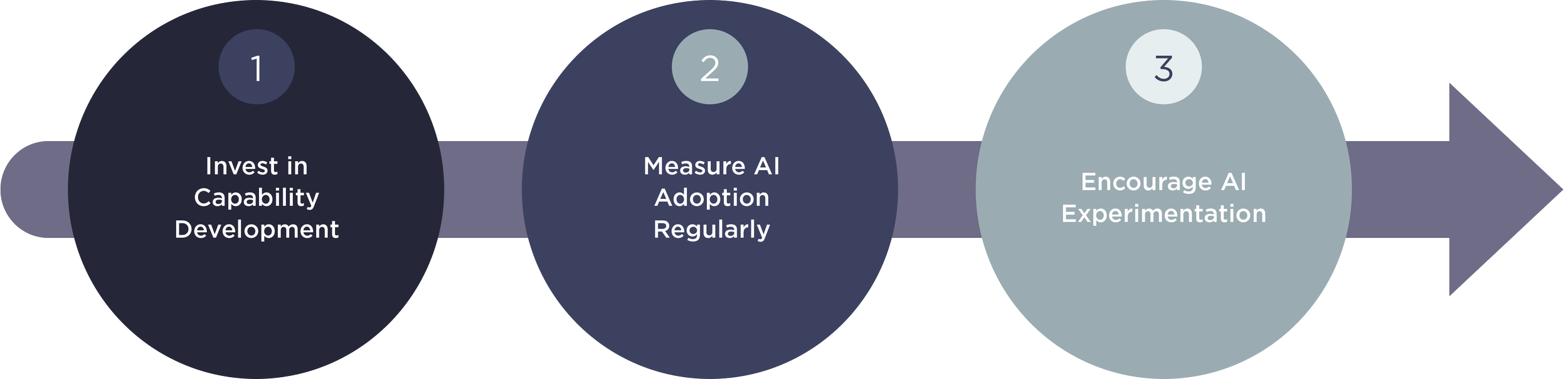
To close the AI adoption gap and realise AI’s full potential, HR and people analytics leaders should focus on three actions:
1. Invest in capability development
Leading teams differentiate themselves through advanced use of machine learning and agentic AI. Building these capabilities—rather than relying solely on off-the-shelf tools—is critical.
2. Measure AI adoption regularly
Establish clear frameworks to track AI usage and impact across roles and employee groups, and publish a regular internal “AI in HR” scorecard. Without consistent measurement, true adoption and resistance remain invisible.
3. Encourage experimentation in a safe environment
“A” Teams are far more likely to explore advanced AI use cases. Leaders should promote experimentation, make sharing use cases expected and safe, and recognise learning—not just outcomes—to accelerate progress.
Download Our Insight222 People Analytics Trends 2025/26 Report
Navigating AI and People Analytics: From Ambition to Action
Our latest Insight222 People Analytics Trends 2025-26 research - the largest global annual research into the topic of people analytics with input from over 370 organisations globally. Inside this report you’ll discover how People Analytics is driving business outcomes, and the four key drivers that organisations can use to minimise risk and maximise value from AI in HR. Watch the webinar here.